
We ask only one question in our clips
 The two door Hillman Imp– most of us have memories of our past cars
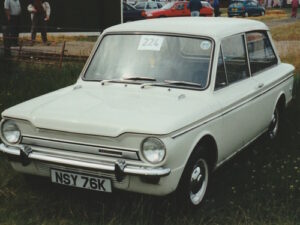 The two door Hillman Imp– most of us have memories of our past cars
Our question in relation to older cars is –What type of car did your family have?
We show how the carer can develop more related topic questions from our one question asked at the end of each clip. This is vital in order to make the clip more related to the person they care for. We deliberately only ask the people living with dementia and alzheimer’s one question following the clip content. To ask more than one question at this point would only confuse them even more. However, we realise that the people living with dementia and alzheimer’s may not respond to that question we pose at that particular time. So, within the carers notes which we supply with every clip we provide other questions related to or derived from the clip. This will allow the carer to develop their own more personalised questions featuring names of people for example that the people living with dementia and alzheimer’s can remember. The carer can bring personal memories into the questioning to make the clip even more customised.
An example of related type questions
Our themed clip can with some thought easily stimulate in the carers imagination related link questions derived from the clip. As an example of related type questions we provide twenty questions derived from our demonstration clip called “Meet Violet and Bluebell my grandfathers Clydesdales”
 The lovable Clydesdale foal — such a therapeutic intervention that brings back memories
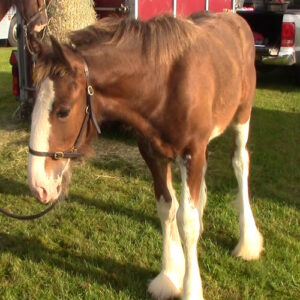 The lovable Clydesdale foal — such a therapeutic intervention that brings back memories
 1. Who did you like visiting when you were younger
2. Can you remember the names of that people you liked to visit
3. Where did they stay
4. How did you travel to their house, walking, bus, tram, bike, motor bicycle and side car, motor car, motor van etc
5. Did your parents have a car. What type of car was it
6. What did you do when you went to visit them
7. Did you have special visiting clothes you put on to visit
8. Did people visit you
9. Did the older folk and the children all speak in the same room.
10. What games did you play with the children you visited
11. Did you ever go to the beach
12. Do you want to go back again and listen to Don speaking about Violet and Bluebell
13. Can you remember going to the carnival, circus, pictures or where ever—huge potential in these types of question.
14. Can you remember the name of the picture house you liked the best
15. What was your favourite film
16. Did you ever go on school trips
17. What was your favourite visit—people or place or event
18. My grandfather liked to go to the local agricultural shows
19. Should we go on a visit tomorrow to a favourite of the PLWD
20. Did you go shopping with your mum
21. Did you go on visits with the guides, scouts or whatever they did.
22. Did you visit the local swimming baths
23. Etc
These are the types of conceptual questions the carer can integrate within our clips.
We all can remember the days of the record player and who were our favourite artist back then. Our dementia reminiscence film therapy help your loved one find the places where their past memories are hiding.
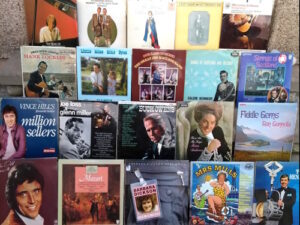 We all can remember the days of the record player and who were our favourite artist back then. Our dementia reminiscence film therapy help your loved one find the places where their past memories are hiding.
Interests past and present
Leisure activities they enjoy or enjoyed
Achievements they are proud of
Significant roles they have performed during their world of work
What comforts them
What they like to talk about
What is important to them
Who is important to them
What makes their day
Their goals
Their hobbies
Triggers of negative response need to be remembered and avoided
All these inputs and thinking will soon become second nature to you the carer and lead to better and longer spells of normal life away from the trauma of dementia and alzheimer’s.
A clip about education for example would have prompts like these for the carer to further develop to make the clip even more relevant to the person you care for.
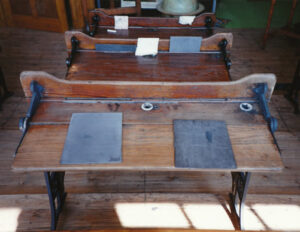
A two seater school desk 1950 with ink wells. Our school days are all contained within our personal “memory bump”. This is the years which means most within our memory. That is why our clips relate to a past that people can relate to.
What school did you go to?
Let’s look at our old photos of you at school
Can you remember your teacher’s name?
What games did you play?
What was your favourite subject?
What did you have in your school bag?
Did you wear a uniform?
How did you get to school?
Bring the past into the present and ask about their grandchildren school life
What today’s education is and how different it is now?